ARE YOU FREE FROM GIDDINESS? IT'S GONNA BE A CIRCLE.
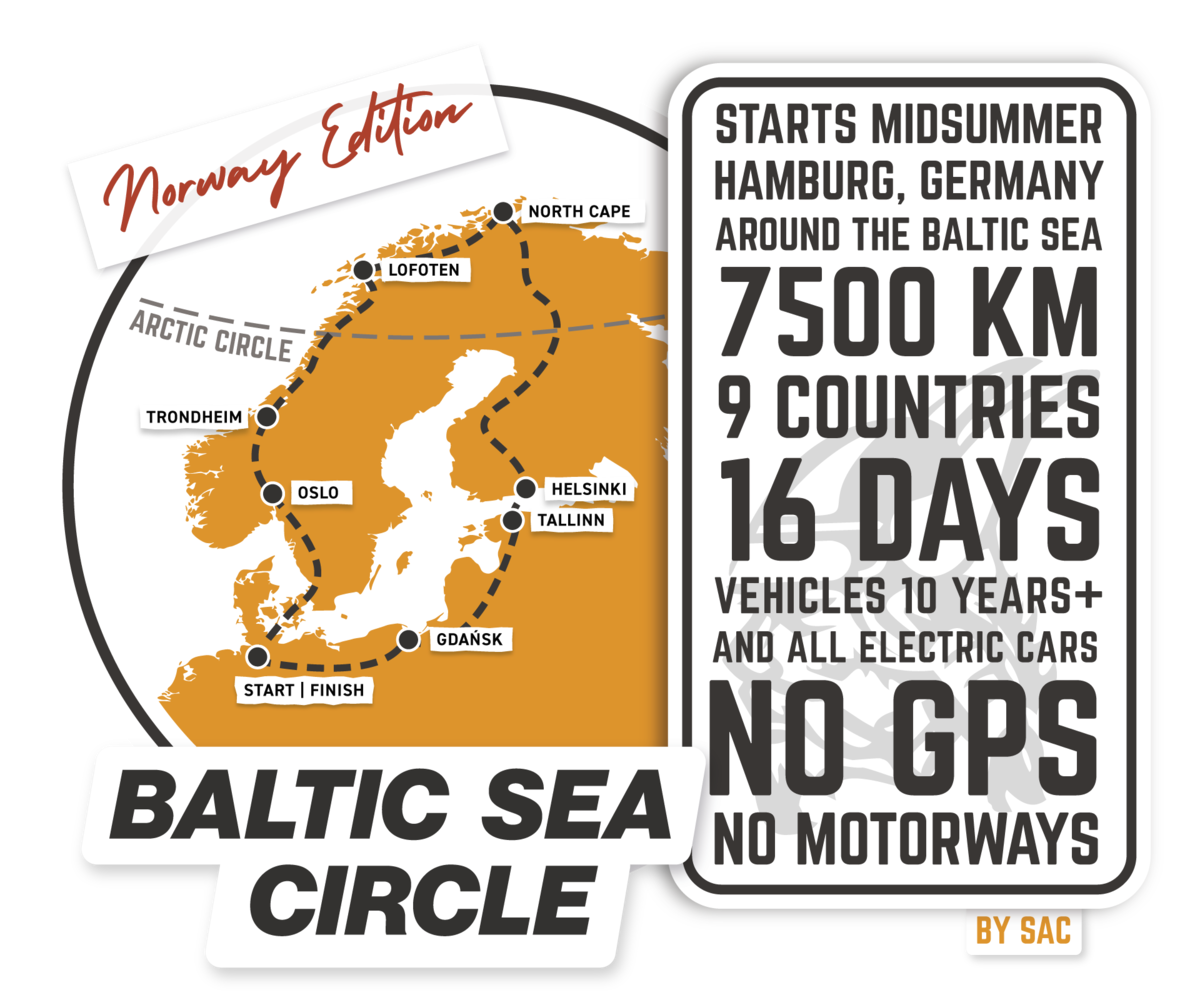
Germany, Denmark, Sweden, Norway, Finland, Estonia, Latvia, Lithuania, Poland. For this ride you should be free from giddiness. Because no matter which route you choose: It goes in a circle!
We challenge you: The Baltic Sea Circle is an adventure and not a guided tour! You are on your own when choosing the route. We don't give you a specific route that you must follow. The route suggestion from the roadbook is your guideline, but not a mandatory program. Where would the fun be if all the rally teams were driving around the Baltic Sea in a long queue of cars? Exactly! You turn off where it is most adventurous for you.
The tasks and mission in the roadbook require team spirit and creativity to dive even deeper into the adventure and the foreign cultures.
And so that each team can tell its own stories, we throw fantastic rally events - with the entire rally community. Where and what exactly happens on the route remains our secret until the start...you'll find out in the roadbook!
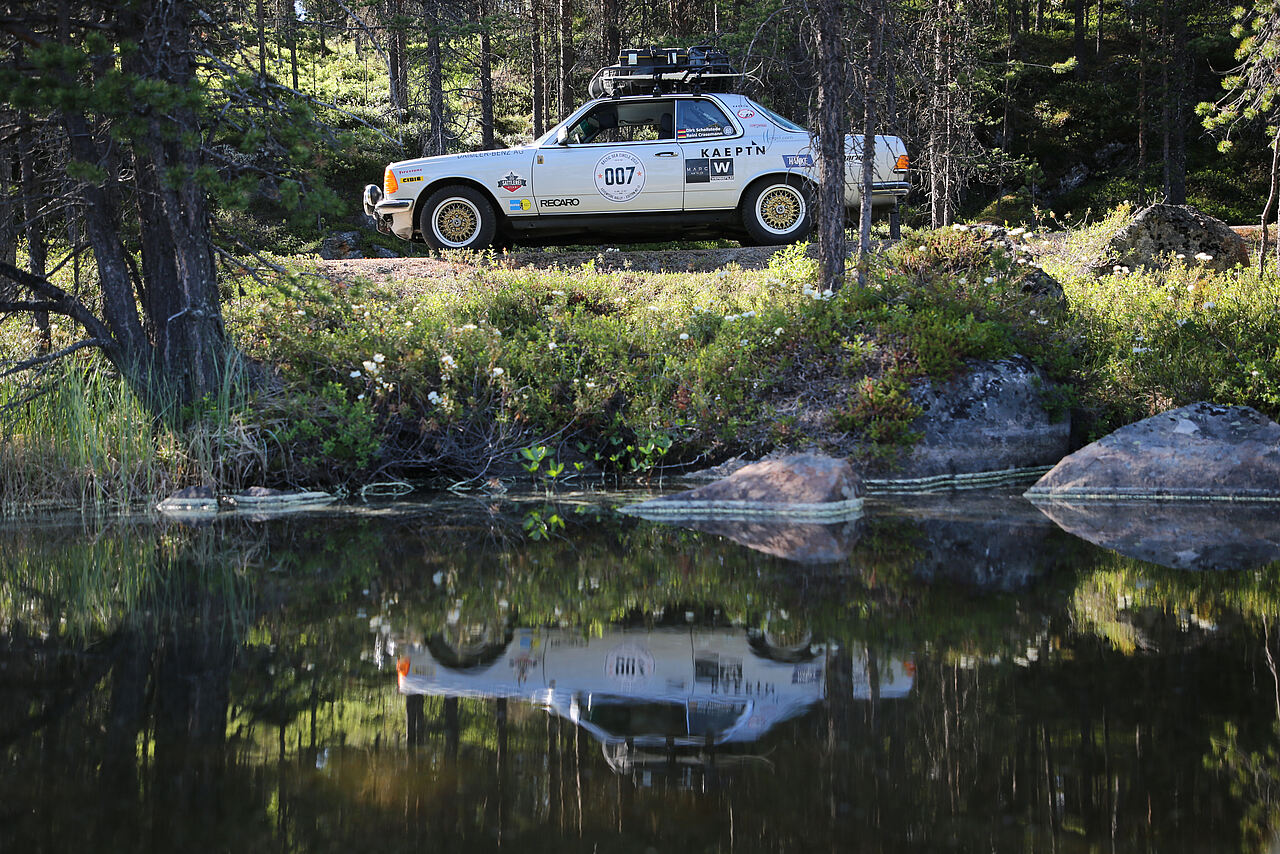
The adventure starts in northern Germany — and within the first few kilometres, the route pulls you out of everyday life and, step by step, into the great journey of the far North. The landscape opens up, the air turns sharper, and rally road-trip mode kicks in instantly. Through Denmark you head north — depending on the route either overland or by ferry across the Fehmarn Belt — and the moment you cross into Sweden via the impressive Øresund Bridge, you know it: the Scandinavian chapter has begun. Before long, you’re swallowed by endless forest belts, where lakes lie like mirrors between the trees and the green seems to stretch forever.
Further north, it turns almost fairytale-like: enchanted woods, glittering waterfalls, soft rolling hills — and backroads that carry you effortlessly through nature. With every kilometre, the light begins to shift. Midsummer stretches the days, the evenings linger, twilight refuses to leave — until “late” and “early” blur into one bright, endless summer feeling. And the closer you get to Norway, the more the scenery gains drama: valleys open wide, mountains rise on the horizon, and everything feels bigger.
Then the coast reveals itself: water, rock, island worlds — and between them, fjord landscapes where sky and mountains meet in glassy reflections. Sometimes the road runs right along the sea; sometimes it clings to cliff faces and sheltered bays, repeatedly broken up by ferries — short crossings that set the rhythm of the stage. And finally you reach the Arctic Circle — and with it the realm of the Midnight Sun: the sun no longer sets, the light stays, and the day suddenly feels limitless.
From the Arctic Circle onwards, the route commits to the farthest North of the continent — and the landscape turns the volume up. Even the shift onto the sea feels like entering a different world: you board the ferry towards the Lofoten Islands, and with every nautical mile the silhouettes grow sharper — jagged peaks rising straight out of the water, with calm bays and beaches in between, where the Arctic Ocean can look unbelievably turquoise and crystal clear.
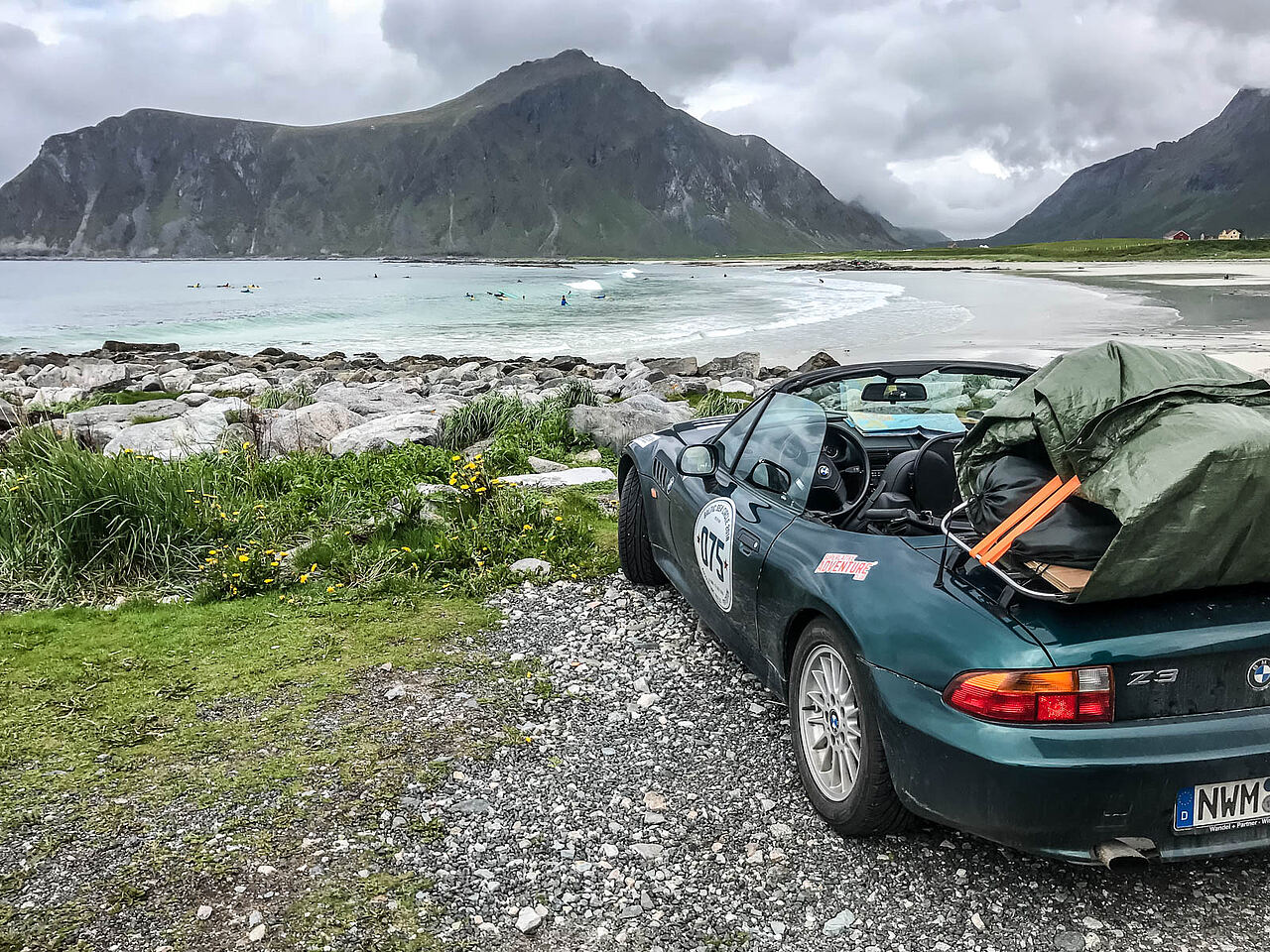
On the Lofoten, you go island by island through scenery that keeps switching between postcard and movie set: narrow fjords, sheer rock walls, open stretches of coastline — plus little bridges and causeways that stitch land and sea together in short, dramatic bursts. And the light never leaves your side. Midsummer means long days, no real night, and that crisp clarity where contrasts feel sharper and the landscape looks almost unreal in its precision.
As you continue towards Tromsø, everything grows rougher — and wider: bigger fjord systems, more open sea, more of that unmistakable Arctic edge in the air. The roads follow the waterline, then climb through mountain passages, constantly opening up views of island chains, snow patches at higher elevations, and horizons that seem to run on forever. And then, finally, you push north to the North Cape — the edge of the continent — where the Arctic Ocean feels closer, the wind turns sharper, and the landscape delivers its grand finale: rock, sea, vastness — and the feeling of truly having made it all the way to the top.
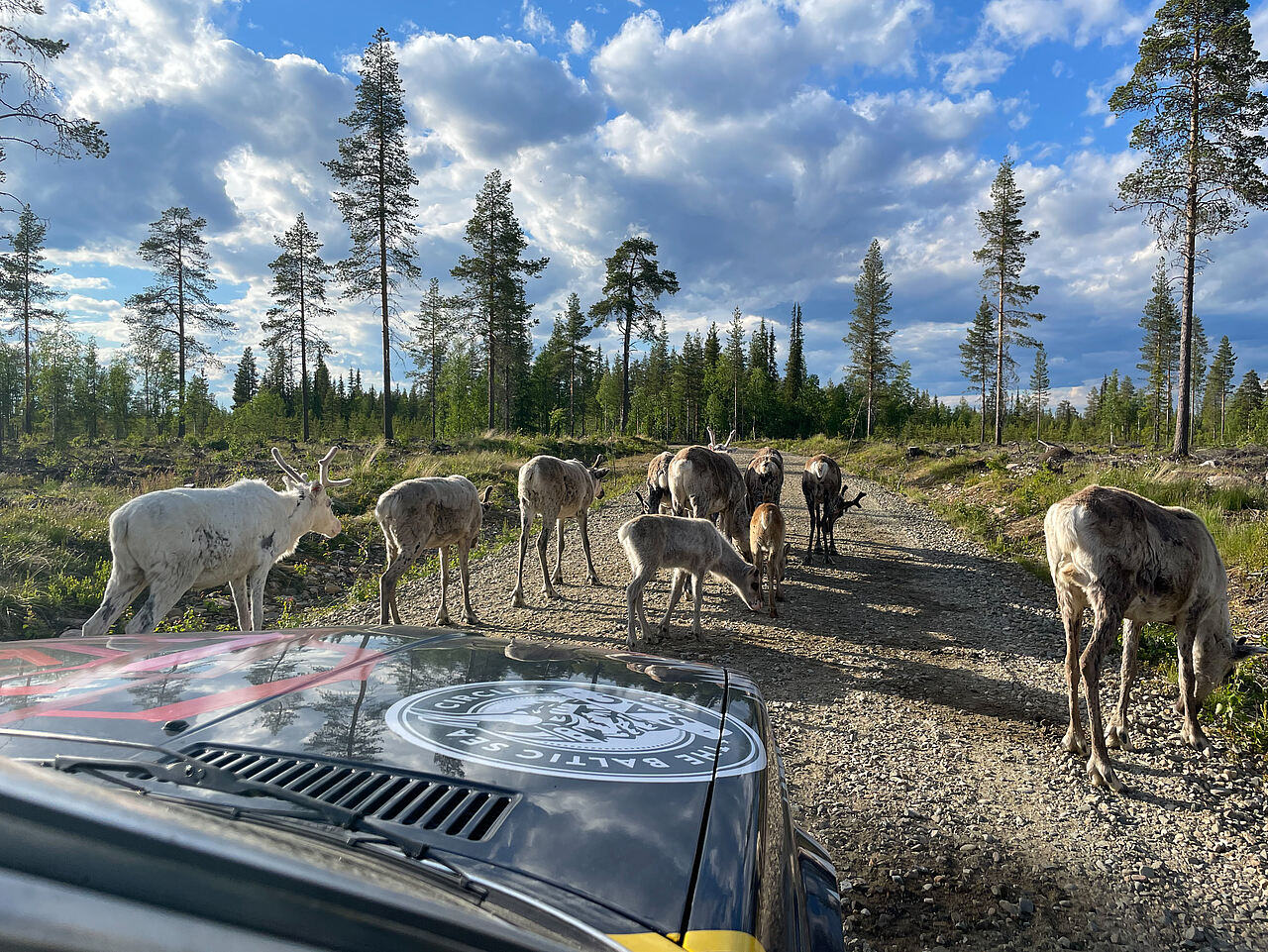
From North Lapland to Estonia, the North opens up once more — shifting from Arctic coastline to landscapes that feel almost endless. Leaving the North Cape behind, you dive into Finnish Lapland: wide horizons, crisp air, lakes and rivers, sweeping peatlands — and that rare northern summer light that hardly ever fades, stretching the day into something that feels infinite.
As you head south, the scenery transforms. The raw Arctic gives way to Finland’s famous “land of forests and water”: dense conifer woods, countless lakes, quiet shoreline roads and narrow back routes that set the pace. Every now and then the landscape breaks towards the Baltic coast, where the air turns maritime and the sense of space changes again. And for Finland’s finale, the capital awaits: Helsinki — clean-lined architecture, sea views everywhere, and a city spread across roughly 330 islands and an immense coastline.
Then it’s across the Baltic by ferry — and with your arrival in Tallinn, a different kind of North begins. Estonia feels quieter, wilder, almost enchanted: deeper greens, gentle hills, boglands and long, unhurried roads. A soft contrast to the High North — and at the same time the gateway into the next chapter of the Baltics.
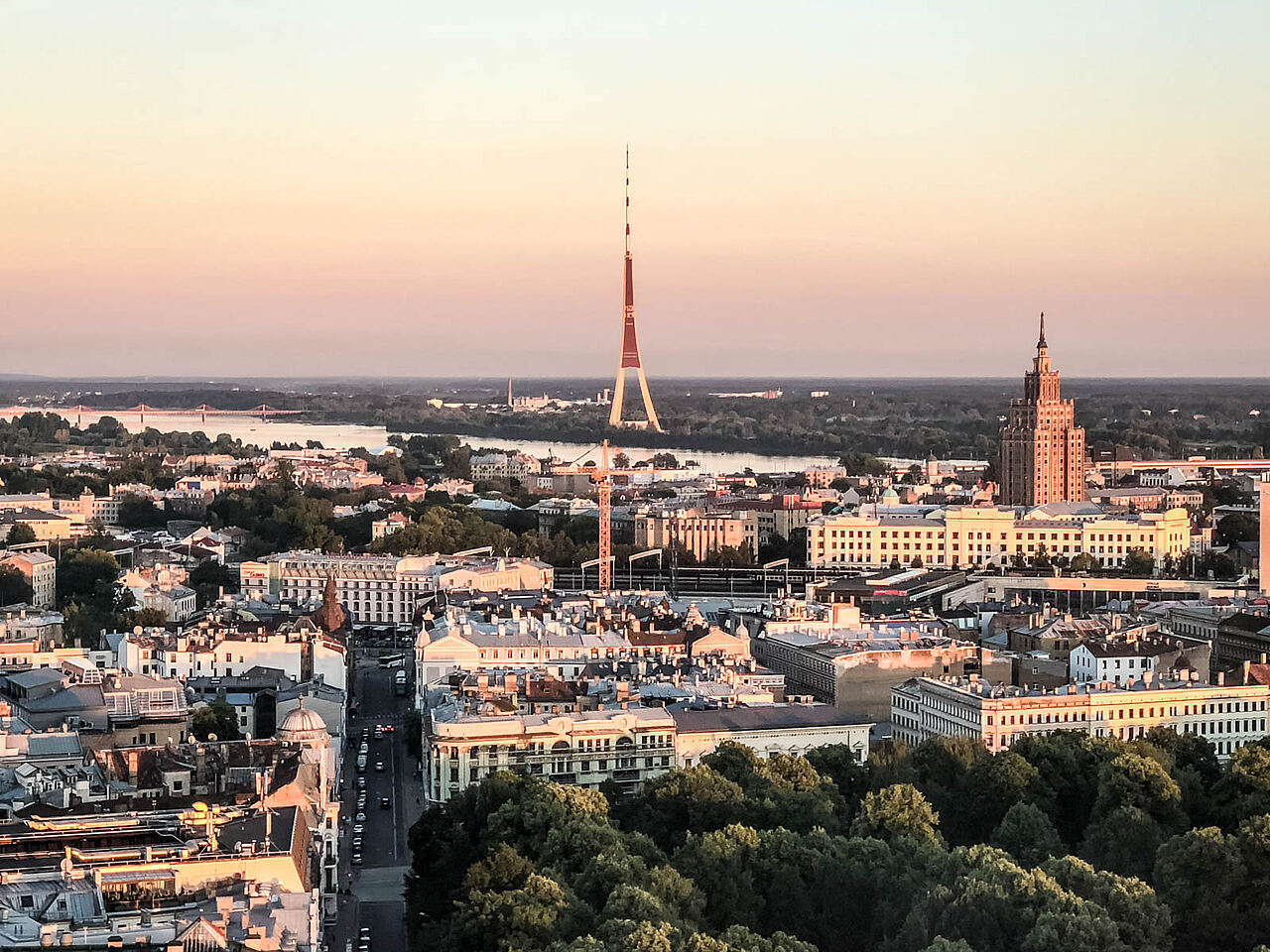
On the final legs, the rally carries you through the Baltic States — then follows the Polish and German Baltic coast all the way to the finish in Hamburg. And you’ll feel the shift immediately: less Arctic immensity, more culture, history and Baltic Sea atmosphere. Between Tallinn and Riga, medieval old-town scenery blends with buzzing street cafés, grand boulevards and lively squares — an urban counterpoint to the High North, without ever letting go of the outdoors.
Then the spotlight moves to Poland. First come the Masurian Lakes: a quiet, water-filled world of pine forests, reed-lined shores and narrow lakeside roads that seem to thread themselves through the landscape. After that, you turn back towards the sea — and Gdańsk adds one more true highlight: Hanseatic charm, historic façades and that unmistakable harbour-city energy, perfectly placed for the run-in to the finale.
From here, it’s the Baltic Sea once again: wide beaches, dunes, coastal forests, island chains and horizons that stretch forever — first along Poland’s coast, then along Germany’s. And finally, the circle closes in Hamburg. You’ve lived Northern Europe at full intensity — all the way up to the Arctic Circle and back — and you’ll return with stories you’ll be telling for years.
Facts
- Scandinavia: Denmark, Sweden, Norway, Finland
- Arctic Circle
- North Cape
- Lapland & Finland
- Baltic States: Estonia, Latvia, Lithuania
- Polish & German Baltic Sea coast
- Spectacular Roads
- Fascinating Roadbook Competition